Blog Archives
RELATIONSHIP BETWEEN TRAINING AND NUTRITION
Recently, one wise man wrote: people want to lose weight, BUT IF IS POSSIBLE TO NOT EXERCISE AND TO CONTINUE TO EAT THE SAME AMOUNT THE FOOD. THAT THING EXPLAIN A LOT WHEN YOU COPY TO OTHER ASPECTS OF LIFE. Today we have article about the relationship between diet and workout, then what is the role of sacrifice and perseverance, what is the tactics in training, truth, reasons, causes and consequences …


As we have previously reminded the caloric deficit, mean spend more calories than what you entered and thus lose weight. The energy that is consumed must be repaid only in the form of nutrients (protein, carbohydrate, vitamins, minerals) that are consumed and broken down during exercise, so body need to be quickly recovered and the cells restored. Compensating for consumed energy, introduction of calories burned along with the phrase “I was practicing very hard so now I can eat a lot and everything”, you enter more calories that will be not burned, but this only prolongs the period of achieving the target. Most important is, the food need to contains a sufficient percentage of protein and complex hydrates with low values of calories that will compensate the degraded matter, and also to encourage the body uses fat as a result of caloric deficit.
The values of consumed energy range of 1.2 kcal per minute during the rest, to more than 20 kcal per minute during intensive activity. Which means that if you are a beginner and consumes an average of 10 kcal per minute, this is just 600 calories in an hour of training, which is half meal in McD. This shows how little the ratio is of energy consumed in training and the energy input on classical food. Today it is said that the relationship between DIET and WORKOUT as a percentage of 80:20 in favor of nutrition, if we want to reach certain results. The data and experience tells us that, professional athletes in body fitness or bikini models, to achieve the desired figure, in the final preparations they have only 3 sessions per week, and the rest is food and tactics when and what nutrients should be consumed.
Exercise is very helpful in terms of speeding up metabolism, blood circulation, healthy airways, vitality, tight muscles and healthy ligaments, joints and bones. These are the benefits of exercise, which will be given to the regulation of feeding results.
The determination and compliance advice and guidance to give by trainers, is the most important thing for certain success. Period for achieving results can be very short if you are focused on the target, otherwise, in violation of the rules, only dispose of success, to whom might never come. It depends on you!
Share this:

FOOD VS. SUPPLEMENTS
Under pressure from industry and pharmaco onslaught of the latest and supposedly best products, we are often in a dilemma whether we need to strengthen some of its food supplements that are offered to us. Clients often ask a questions, should they need to take supplement and which one. In this article we will deal with supplementation for recreational athletes and fitness enthusiasts, and their replacement through diet.
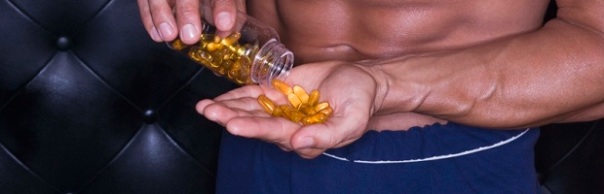
The most frequently mentioned supplements are: protein, creatine, L-carnitine, caffeine, glutamine, leucine, calcium, coenzyme Q10, iron, magnesium, omega-3 fatty acids (fish oil), vitamins (A, B1, B2, B5, B12, C, D, E, K), zinc …
We will describe their role individually and through the replacement foods:
Protein or whey is obtained by conversion of the milk into cheese. Whey proteins have the highest bioavailability (most effectively come to the parts of the body where they are needed). The amino acid composition of whey proteins is the most valuable in the sense that contain the highest branched chain amino acid (BCAA), as well as all of the essential amino acids. Whey is the richest source of BCAA (vitamins) that are metabolized in the muscle, and the most important in periods of training, but also in the recovery period. 3 x 55 g scoops = 9 chicken legs.
Creatine is a substance naturally produced by our body. The body produces about 2 g of creatine per day. The role is to promote the restoration of ATP (the main energy for working muscles), which means that his taking a prolonged time work. Creatine has in the red meat and fish.
L-carnitine is the best known role in the transfer of fatty acids across the cell membrane to the mitochondria where the fatty acid burning and used as an energy source. L-Carnitine helps to turn fat into energy. L-carnitine in the body is present in sufficient quantities, and entered into the body through food of animal origin.
Caffeine we have more processed in a given link CAFFEINE . 5 x 200 g in tablets = 13 espressos.
Glutamine is a nonessential amino acid, meaning that it is an organism capable of its own. Plays an important role in the metabolism, in the production of ammonia in the kidneys, the reproduction of glucose by the liver. 6 x 500 g in tablets = 88 raw leaves of spinach
Calcium by far is the most important role is in building bones (firmness) and teeth, especially in the course of growing up. Bone strength is very important in strength training and high muscle mass. 3 x 500 g tablets = 2.2 liters of milk
Omega-3 fatty acids must be supplied in the diet, because they are not producing organism. They are a major component of cell membranes, are essential for cell regeneration and reproduction, and hormones, which trigger all functions in the body, can not be produced without them. The richest sources of omega-3 fatty acids include fish, especially in cold seas and flaxseed oil.
Magnesium heart problems, headaches, high blood pressure, allergies, muscle tension, diabetes – all of these diseases are associated with a lack of magnesium. 1 x 250 mg in tablets = 32 raw of leaves spinach.
Iron is also an important part of the hemoglobin molecules which is located in red blood cells. In fact, if there is no iron, the bone marrow can not produce this, for the life of a very important substance, which carry oxygen to the farthest parts of the body. 1 x 15 g in the tablets = 3 blocks of Tofu (soy cheese).
Zinc is essential for maintaining a strong immune system, the body and stimulates the creation of white blood cells in the bone marrow. Eggs, Seafood, Crabs.
CoQ10 participates in the creation of energy in every cell of our body. It acts as a catalyst in the process of converting food into energy, which occurs in the mitochondria of cells. Lack of coenzyme Q10 can contribute poor diet, stress, infections, chronic disease, and certain medicines. 3 x 30 mg capsules = 100 grain berries.
Vitamins: A carrot, B1 lettuce, B2 Mushrooms, B5 Avocado, B12 Salmon, C (cabbage, pomegranate, pepper, lemon), D Shells, E Kivi, K Cabbage.


Ensure that the classical food satisfy all the daily required amounts of the respective supplements. If you need to complement the nutrition supplementation, which is sold in stores in the form of pills, ampoules, powder, consult your trainer or some expert. Be careful and remember this text, so as not to leave half salary in the store!
Share this:

NATURAL TESTOSTERONE BOOSTERS
In today’s world it is a lot argued what is the role of testosterone, how to increase T level in the body, what is the healthy ways to do this. The survey found that people due to lifestyle and diet have a reduced secretion of this hormone, which has a very important function on our body. In the following, we will give some helpful information and answer some questions.
Today, the research found that the Japanese age of 100 years had higher levels of testosterone than Americans age of 30 years. With reduced level this hormone leads to chronic fatigue, reduce male libido, lose muscle mass, increase percentage of body fat, decreased bone mass, hair loss, low volume of semen, mood swings. The level of testosterone decreases with age, and over 40% of men, over 45 age, are the group at risk for this problem.

Natural ways to increase T hormone is:
Ejecting dietary sugar. The average American takes 12 teaspoons of sugar a day, and sugar directly reduces the level of T hormone secretion. When you eat foods rich in processed grains and sugar, your blood glucose level becomes elevated. To keep blood sugar levels, the pancreas begins to work overtime to produce insulin, which helps the flow of sugar from the bloodstream into the cells, in order to metabolized for energy. Finally, if your cells are exposed to insulin for a long time, you develop insulin resistance, which causes the occurrence of type II diabetes. Diabetes develops when your body is unable to produce enough testosterone.
Good quality sleep. According to scientific research long enough and timely sleep are the two most important ways to raise the level of T hormone in the blood. Sufficient sleep is 7 hours is recommended, also to be already at 22h going to bed, because sleep quality is the best from 22h to 2h in the morning. Level of the hormone cortisol, which reduces the level of secretion of the hormone T, is placed in the normal frame.
Reduce the level of fat in the body. Weight loss has a predictable and linear relationship with increasing testosterone naturally. When you take into consideration the effect that insulin resistance and poor sleep habits have on testosterone, this makes sense because they are all closely linked to obesity. At the core of this problem is the discharge of processed sugar from the diet, which is associated with insomnia, overweight, diabetes and other negative impacts on the secretion of hormones.
Stress reduction. The problem is when you are chronically stressed, and your body remains stuck in the condition in which the pumping out cortisol (the hormone stress) constantly.
Interval training with a combination of weight training. If you want to naturally increase testosterone and growth hormone, then combine weights with HIIT training (high intensity interval training). Lifting weights 6-12 reps, including large muscle groups will help your body to build more muscle mass. More muscle causes your body to produce more growth hormone. Despite the lifting, interval training with a combination is best for the overall increase growth hormone. It also maintains the level of T hormone. Interval method involves exercise of 90% to 100% of your maximum for short periods, in order to combust stored sugar (glycogen). This helps your body to burn fat in the next 36 hours and replace vital energy stores in your body. In addition to increasing the level of T helps in: lowering heart rate, lower blood pressure, accelerate blood circulation, detoxification by stimulating the lymphatic system.
Increasing the level of T hormone with using protein and healthy fats. Recent studies reveal that high branched chain amino acids (BCAA) significantly increases the level of T hormone and falling hormone cortisol. Recharging can be done in the form of protein shakes or simply increased protein diet (chicken, fish, eggs).
Sunbathing and Vitamin D. Studies show that Vitamin D increases levels of testosterone naturally, in obese men and up to 30%. This is interesting because research shows that vitamin D3 also linked to the prevention and treatment of cancer. Two of the best ways to optimize your vitamin D levels in helping and strengthening the secretion of testosterone are 20 minutes each day sun exposure. This is best done in the morning or afternoon, with exposure to 40% of the parts of the whole body.


 health & fitness