Blog Archives
GLYCEMIC INDEX – blood sugar level
What is glycemic index?
The glycemic index (GI) is a number associated with a particular type of food that indicates the food’s effect on a person’s blood glucose (also called blood sugar) level. Carbohydrates with a low glycemic index increasing sugar in the blood slower, high glycemic index increasing sugar in the blood faster. As is sugar in foods is simpler (glucose, sucrose), rising level of sugar in blood is faster. Fructose (fruit sugar), although it is a simple carbohydrate, but rising level is slower. Complex carbohydrates, such as starch from cereals and potatoes, must first be separated to simpler sugars, and then pass into the bloodstream. This process takes place in the digestive tract and liver and depends on the: type of sugar, cooking food and dietary fiber (quantity) in the diet.
Foods with a low GI are slowly digested and long stays in the small intestine, hours after ingestion. Good sides are slow and continuous release of glucose that occurs during the performance of physical activity. For foods with a low GI sugar level in the blood is held stable while eating foods with a high GI will free glucose too quickly, which results in a tremendous increase in blood sugar.
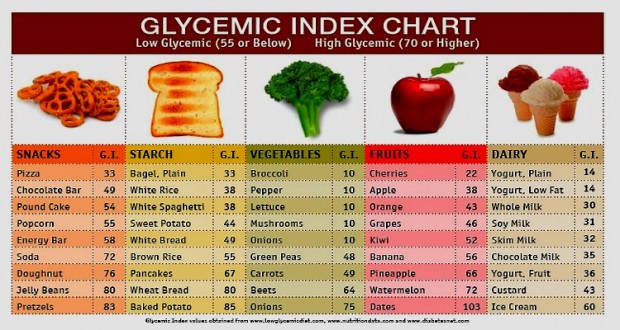
THE IDEAL FOOD IS A FOOD WITH GLYCEMIC INDEX LESS THAN 45. FOOD WITH GLYCEMIC INDEX FROM 45 TO 60 IS IMPORTANT TO USE OCCASIONAL. FOOD WHOSE GLYCEMIC INDEX OVER 60 IS IMPORTANT TO USE RERELY.
Diabetics should avoid concentrated sugars (honey, juices, white sugar, sweets stored with sugar, cakes, muffins), because glycemic index of glucose is 100, white sugar index is 68. If your body need sugar replace with fruit, fruit has index 23.
The quantity of fruit a day that you enter , not only determine the glycemic (sweet index), also determine the amount of dietary fiber, vitamin and mineral composition, the amount of water fruit acids and total caloric impact of certain types of fruit. Legumes (beans, peas, beans) have a large glycemic and caloric effect, but they should eat, because it is healthy food and this food is rich with dietary fiber.
Learn compositions of foods, their caloric value, glycemic index and amount of dietary fiber. At first it may be difficult, but once you get the hang yourself it will be surprised success and ease way to control your blood sugar. With increasing intake of sugar and food with a high GI your body will need more frequent intake of sugar, so it is important to bring groceries with low GI so you will be full after meal, do not need more food and also you will not increased your body weight.
Share this:

FATS
Fats are primarily energy matter which is entered through diet using foods of plant and animal origin. They are the bearers of vitamins A, D, E and K, are also constitutive role because constitute 2% of each cell. Fat with sugar constitute the cheapest source of energy, because 1g fat is burning 9 kcal (twice the amount of protein and carbohydrates).
Fatty acids can be classified as saturated and unsaturated.
The first type are saturated fats, which are mainly found in meat, eggs, dairy products, including butter, cheese … much better and healthier type of diet are unsaturated fats. These are healthy fats and are divided into two groups: monounsaturated and polyunsaturated.
Monounsaturated fats are found in olive oil, walnuts, canola oil …
Polyunsaturated fats are found in some vegetable oils and fish oil. These are:
a) Omega 6 linoleic acid. The role of the LOOK of the proper growth of the organism, has them in sunflower, corn and sesame oil.
b) Omega 3 linoleic acid. The role is reflected in the structure and function of cell membranes. There is oil from flax seeds, pumpkin seeds, and fish oil: salmon, tuna, sardines, herring, mackerel. It can not be created in the body, but must be entered by food. A derivative of omega-3 plays an important role in brain development and function of vision.
Omega 3 fats are especially important because it raises levels of good HDL cholesterol and reduce levels of bad LDL, and are also important for brain development. Act favorably on the health of the heart and blood vessels, and intake of fish two to four times a week and regular use of olive oil contribute to reducing the risk of cardiovascular disease.
It is recommended that the ratio of saturated and unsaturated fats in the diet is 10: 30%
Fat containing phosphorus called phospholipids. They are added to foods as an additive, usually in margarine, chocolate, frozen sweets. Since cholesterol is the most important that are more than 90% located in the membrane of cells and is required for synthesis of vitamin D in the skin, and then to the synthesis of certain hormones (estrogen and testosterone). Drugs such as steroids anabolics belong to the group of sterols (used in sports to increase muscle mass and strength but they are very dangerous because it can damage the liver).
The overall fat intake should cover less than 30% of daily energy needs. The origin should be primarily from grains, fruits and vegetables, which are rich in fiber and micronutrients. A person with abnormal lipid whose cholesterol levels remain increased must apply the reduction of daily fat intake to only 20% and 7% saturated.
Share this:

EMPTY CALORIES
Why obese people are never enough full after big meals? Why feel hungry an hour after a heavy meal? And they need to be changed to uncontrollable hunger ceased?

For starters should be distinguished nutritional and energy (calories) worth of food. Some foods can be high-caloric, given at the time of high energy level (sweets), but the body can not get away from them to any building blocks, and practically remain hungry. Addition to that, the more (junk food) intake, the body is more desirous of nutrients. What should a person eat eggs, meat and fish because he needed proteins (instead of salami, pate and sausages), vegetables and fruits, because its essential vitamins, minerals and antioxidants. There are also the carbohydrate and fat content, but not any.
Where they are located. In the past often use the term “empty calories” food boxes rich in carbohydrates and low in protein, vitamins, minerals, amino acids and fiber. There are thoughts: on sweets and other foods that contain sugar (chocolate, sweets, biscuits industrial …), refined grains like white bread, white rice (rich in starch), saturated fat, fast food (hot dogs, hamburgers, fried potatoes …), alcoholic beverages. Especially rich in calories is fried foods (French fries, fried chicken and chips), and very low in nutrients. Large portions, for example, fried potatoes retain 570 calories, which is a third of the daily needs calories for women, and a quarter of the daily requirement for men.
How to resist them. Try to hundreds of smaller fry, and the more you cook the food. Baked potatoes can replace fries and roasted chicken. Avoid carbonated beverages. In addition to large amounts of sugar, quinine in many drinks can reduce the number of platelets in the blood and that adversely affects the liver.Classic bread to replace white bread with whole black beans. Bread with whole grains contain fiber, which facilitates digestion and antioxidants. Classic snacks replace for fruity snack or some integral biscuits that contain grains. Sweets should be replaced by fruit, dry fruit, nuts.


 health & fitness